The Partner Lite is Tennibot’s new stationary version of the Partner ball machine I already use with my students, priced from $1,495 at launch. I got to hit with a pre-production unit before it went on sale, and this is my honest first take on where it fits.
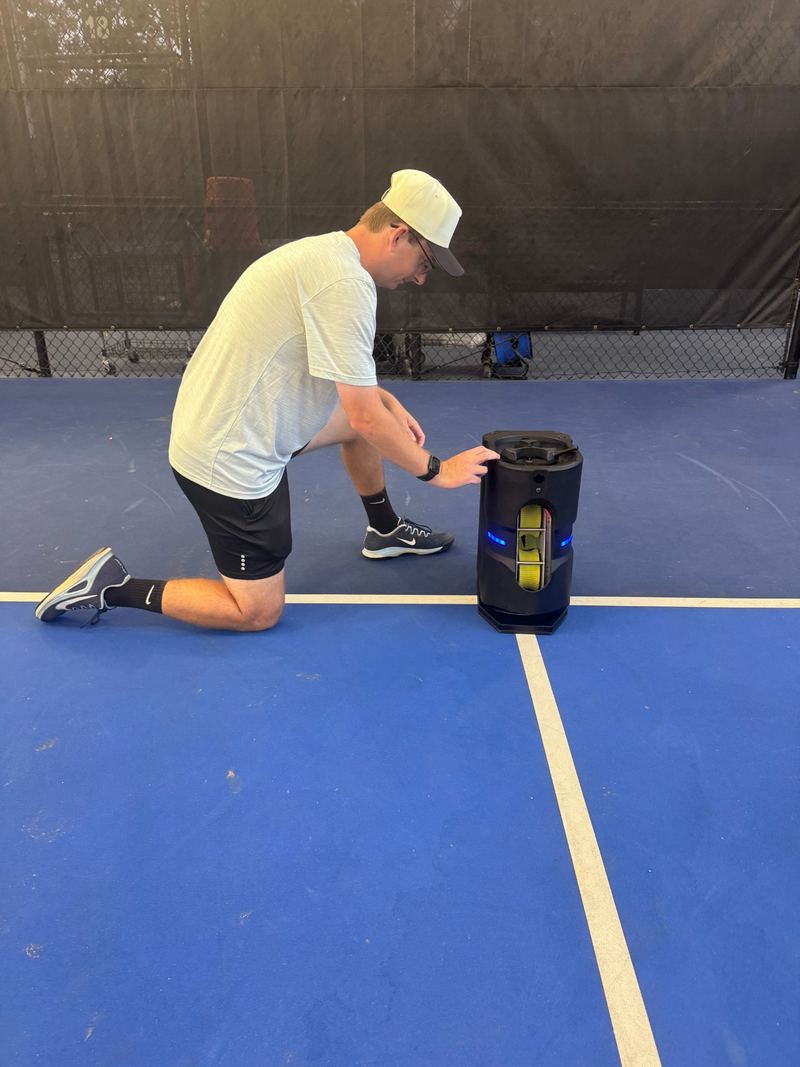
A note on independence: Tennibot let me test an early pre-production Partner Lite before launch. I have no paid or affiliate relationship with Tennibot or any other brand, and these are my honest opinions as a coach.
How I tested
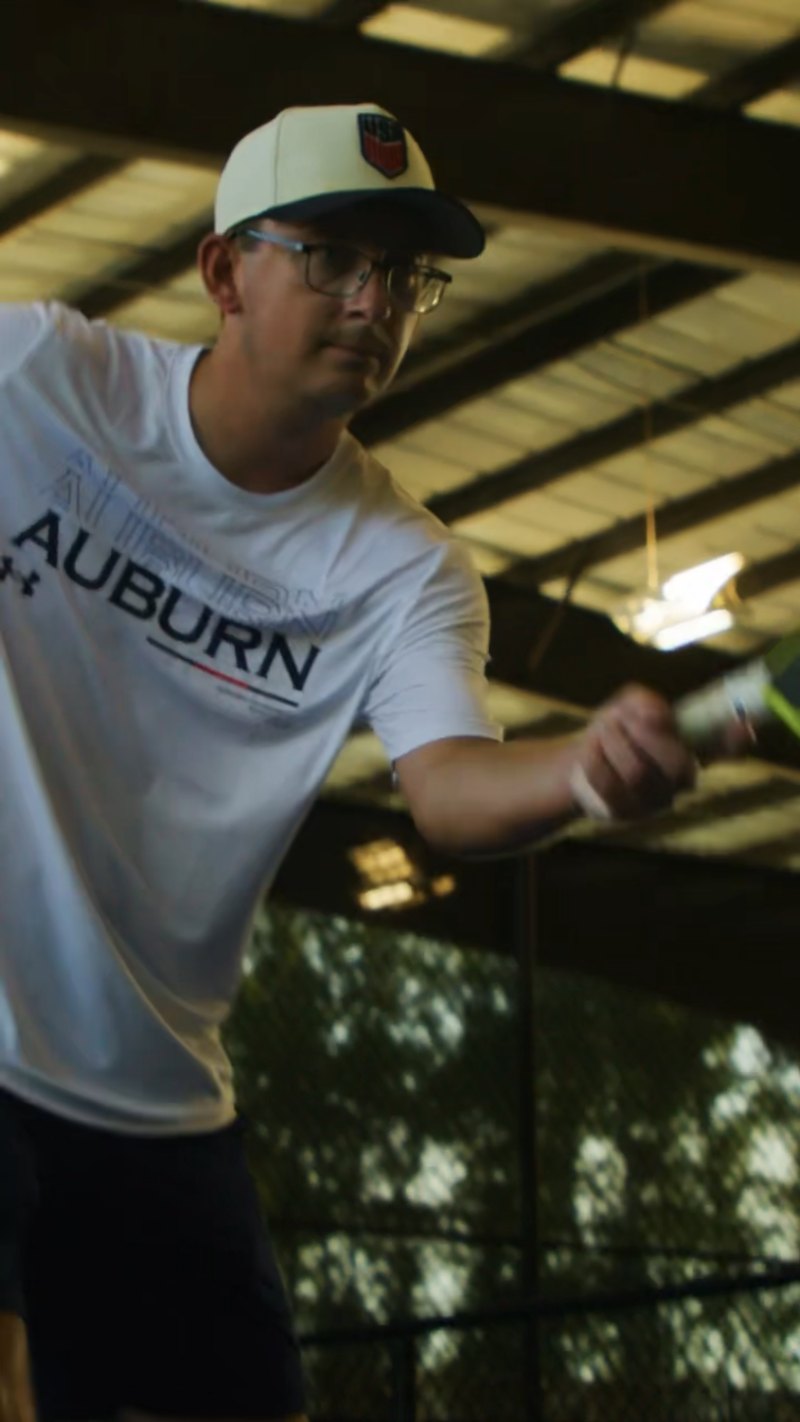
I spent about an hour with a pre-production Partner Lite at the Wilmore pickleball courts, a couple of weeks before it went on sale, working mainly on third shot drops. The machine I have spent the most time with is the full-size Partner, so I was mostly listening for what changed, and what did not.
What the Partner Lite is
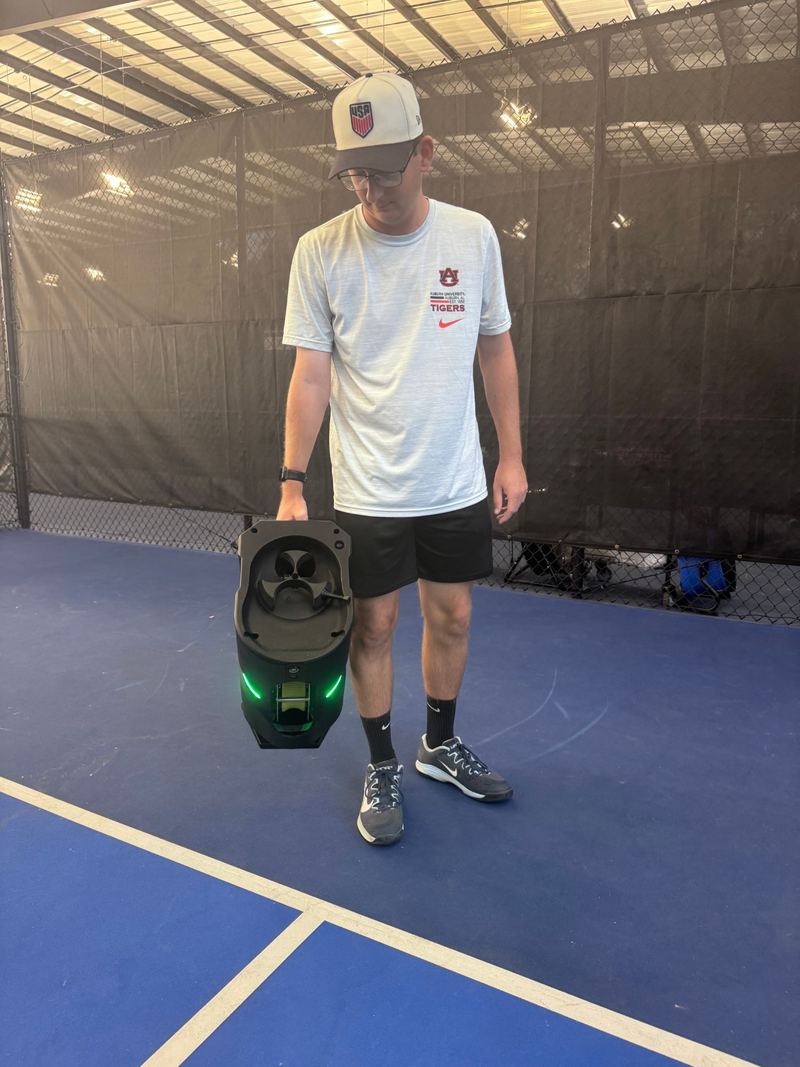
The short version: it is the Partner V2 without the drive base. Tennibot’s own spec sheet lists the two as identical everywhere it counts. Same 4K cameras and on-device AI, same 70 mph top speed (65 for pickleball), same 3,600 rpm of spin, the same 2 to 15 second feed range, the same 140 tennis or 250 pickleball capacity, and the same 4 to 5 hour battery. What changes is that the Lite stays where you set it, and it weighs 25 pounds instead of 35.4.
| Partner Lite | Partner V2 | |
|---|---|---|
| Price | $1,495 at launch | $2,275 |
| Weight | 25 lb | 35.4 lb |
| Moves during drills | No | Yes |
| Max ball speed | 70 mph (65 pickleball) | 70 mph (65 pickleball) |
| Max spin | 3,600 rpm | 3,600 rpm |
| Feed rate | 2 to 15 sec | 2 to 15 sec |
| Ball capacity | 140 tennis / 250 pickleball | 140 tennis / 250 pickleball |
| Battery | 4 to 5 hrs | 4 to 5 hrs |
| App and AI drills | Yes | Yes |
That matters less than you might think for a lot of players. The drills that make the Partner valuable are the ones that move you, mixing depths, angles, and shot types so you are constantly adjusting your feet. The Lite still runs those. What it cannot do is the Partner’s trick of changing its own position on the court mid-drill.
What I liked
- Same feed quality. The throws felt like the Partner I know: consistent pace and placement, quick feed intervals, no lobbed “machine balls.” It hits the ball with real power behind it.
- Same app and drills. This is the part no stationary machine at this price touches. Custom AI sequences, not just basic corner-to-corner oscillation.
- The third shot drop drill. That is what I spent the session on, and it is the clearest example of what the app adds: one specific shot, drilled properly, for as long as you want to keep working at it.
- Simple, and genuinely light. Setup is about as easy as it gets, and at 25 pounds it is lighter than any other ball machine I have played with.
- The price. At $1,495 at launch, it sits in Lobster and Slinger territory while running drills those machines cannot.
What you give up
- It stays put. No self-repositioning during drills. If you want the machine itself to move along the line while it feeds, that is the full Partner’s job.
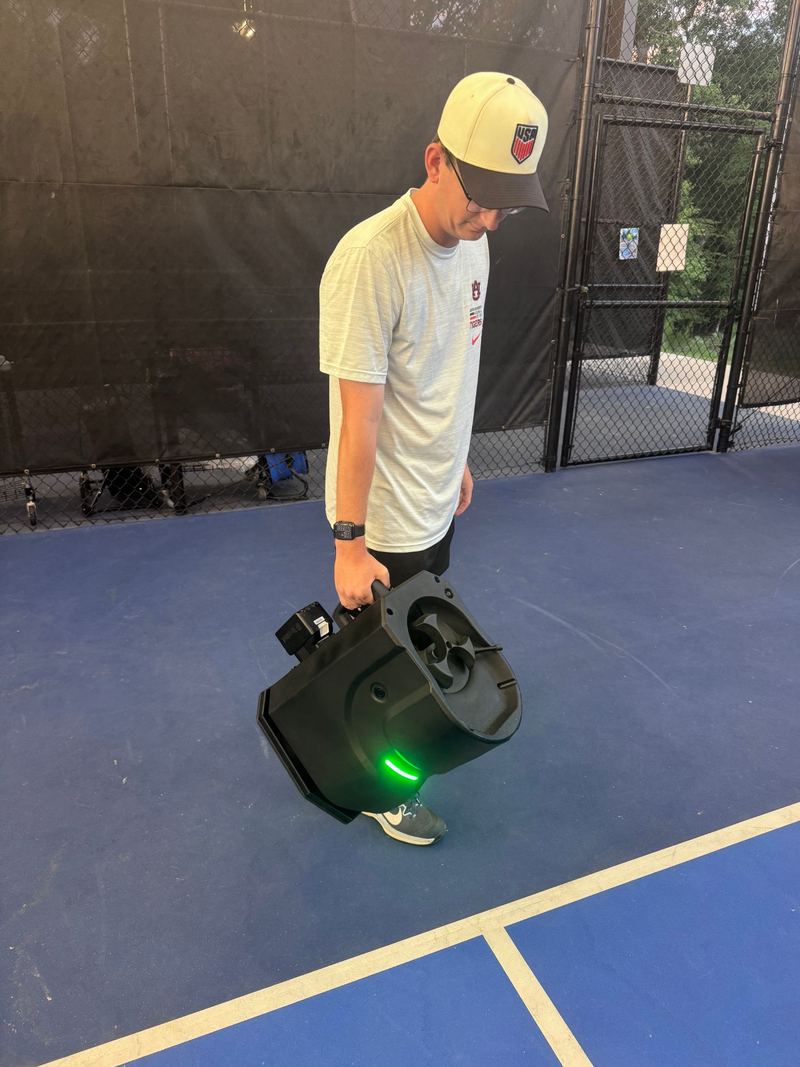
- No rolling wheels. You have to carry it to the court.
- It is brand new. I hit with a pre-production unit, and early buyers are always the first real-world test of a new product.
Who it’s for
- Pickleball or tennis players who want smart drills without the premium price. This is now the machine I would point most improvers toward first.
- Players who drill from realistic positions and do not need the machine to roam. On a pickleball court especially, a well-placed stationary machine covers most of what you need.
- Who should skip it: if machine movement is the point for you, or you want one machine that travels between courts all day on its own cart, get the full Partner instead.
My verdict
The Partner Lite takes the thing that made the Partner worth its price, the app-driven custom drills, and puts it at a price where it competes with basic stationary machines. Judged as a stationary machine, it is the smartest one I have hit with. Judged against its big brother, you are trading mobility for a lower price, and for certain players, that is the right trade.
Frequently asked questions
What is the difference between the Partner Lite and the Partner V2? The drive base. Speed, spin, feed rate, ball capacity, battery, cameras, AI and app are the same on both. The Lite is stationary and weighs 25 pounds; the V2 moves around the court during drills and weighs 35.4.
Is the Partner Lite worth it? If you want programmable, movement-based drills and were priced out of the premium app machines, yes. If you only want a basic feeder, cheaper machines exist. If you want the machine itself to move, buy the full Partner.
Does the Partner Lite work for both tennis and pickleball? It is sold per sport. Check their website before ordering.
Deciding between machines? See my Best Pickleball Machines (2026) and Best Tennis Ball Machines (2026) guides, or start with Are ball machines worth it? And if you’re near Auburn and want help choosing or a lesson, reach out.